We and our vendors use cookies and other tracking technologies on our website. You may change your preferences at any time by visiting . Read more about our Privacy Policy.
Quick answer: Tranexamic acid is an ingredient researchers have studied for melasma and dark spots. The strongest results so far are for the prescription oral form, which is a medical treatment and not something we provide. At BLK BMR Skin Bar in Albuquerque we use tranexamic acid in serums only, as one gentle step in a Korean clean healing routine: barrier, hydration and sun protection first.
BLK BMR Skin Bar is a science-led Korean facial studio in Albuquerque, New Mexico, run by a microbiologist and licensed esthetician. We specialize in Korean facials, glass skin facials and gentle care for mature skin, hyperpigmentation and melasma. We welcome all skin tones and have a special focus on skin of color.
Tranexamic acid is a synthetic ingredient that was first used in medicine to slow bleeding. Researchers noticed it can also affect pigment. The theory is that it interrupts a chain of signals, set off by UV light and inflammation, that tells pigment cells to make more melanin. You may see it on a serum label as "tranexamic acid" or "TXA."
The American Academy of Dermatology describes melasma as patches and spots on the face that are darker than your natural skin tone. It is not contagious and it is not a sign of skin cancer. It is most common in women, and people with medium to dark skin tones are most likely to develop it. Pregnancy, birth control pills and sun exposure are well-known triggers.
Here is what the research shows. A 2023 meta-analysis in the Indian Dermatology Online Journal pooled 28 randomized controlled trials. Oral tranexamic acid, a prescription medicine, showed a significant improvement in melasma scores at 8 and 12 weeks when added to other treatment. Results for the topical form were mixed. The pooled data did not show a significant change at 8 or 12 weeks, and the authors said more research is needed, including on how it works in different skin colors.
A serum is a skincare step, not a medical treatment. We use it alongside barrier repair and daily sunscreen, and we do not promise to erase melasma. Oral tranexamic acid is a prescription medicine with possible side effects, and we do not provide it. If you want to explore it, talk to a doctor or dermatologist.
The AAD says treatments can fade discoloration, but they cannot make melasma go away for good, and it often returns when skin is in the sun without protection. Many people see it darken in summer and soften in winter. That is why a single "miracle" ingredient is a red flag.
Melasma is more common in deeper skin tones, and skin with more melanin can hold on to dark marks after irritation. That makes gentle care the priority. Harsh scrubs, aggressive peels and heat can make pigment worse. In my studio, care for skin of color means barrier repair, hydration, daily sunscreen and ingredients chosen for the skin in front of me.
Tranexamic acid is one of the serum ingredients we can choose from when we customize a facial, along with peptides, cica, azelaic acid and niacinamide. We use it in serums only. We choose by your skin on the day you come in, and we do not promise to erase melasma.
BLK BMR Skin Bar offers Korean facials and glass skin facials in Albuquerque. We also help with hyperpigmentation, melasma, dullness and dryness, and we are a good fit if you want a mature skin facial that is gentle and science-led. New clients begin with a consultation.
Can tranexamic acid cure melasma? No. The AAD says treatments cannot make melasma go away forever, and it can come back.
Does a tranexamic acid serum work? Research on serums is still early. The 2023 review of 28 trials did not find a significant change for the topical form at 8 or 12 weeks in its pooled data, and the authors said more data is needed. We use it as one step, with sunscreen and barrier care.
Do you offer oral tranexamic acid? No. It is a prescription medicine, and we work with serums only. Ask a doctor or dermatologist whether oral treatment is right for you.
How long does it take to see a change in dark spots? Weeks to months, and sun protection matters the whole time.
Is a Korean facial safe for melasma-prone skin? A gentle, barrier-first facial can suit all skin tones. Tell your esthetician about any history of dark marks or melasma.
Where can I get a Korean facial in Albuquerque? BLK BMR Skin Bar, 7520 Montgomery Blvd NE, Suite C2, Albuquerque, NM 87109. Book at BLK BMR bookings.
Healthy skin first. Glass skin follows.
Quick answer: Copper peptide (GHK-Cu) is a well-studied skin-repair ingredient. No published evidence was found that an at-home needle stamp with copper peptide lifts hooded eyes. The FDA has not authorized any microneedling device for over-the-counter sale. At BLK BMR Skin Bar in Albuquerque, we start with Korean clean healing: barrier, hydration and comfort first, then one ingredient at a time.
BLK BMR Skin Bar is a science-led Korean facial studio in Albuquerque, New Mexico, run by a microbiologist and licensed esthetician. We specialize in Korean facials, glass skin facials and gentle care for mature skin, hyperpigmentation and melasma. We welcome all skin tones and have a special focus on skin of color.
GHK-Cu is a small chain of three amino acids (glycine, histidine and lysine) bound to copper. On a label you may see "copper tripeptide-1" or "GHK-Cu." Scientists have studied it for years in skin repair and wound healing, which is why it appears in cosmetic serums.
It is also a water-loving molecule. It does not slip easily through the skin's outer layer. That is the hurdle behind the claims you see in ads.
No published evidence was found that it does. Here is what the research does show.
One laboratory study from the National University of Singapore tested copper peptide on human skin samples. When the skin was pre-treated with a microneedle array, GHK-Cu passed through. On intact skin, almost none did. That is a delivery study done in a lab. It shows the peptide can cross skin that has been punctured. It does not show that a stamp bought online will lift an eyelid.
No published evidence found is not the same as proof that something fails. It means the proof an ad points to is not something anyone can read. A brand that has a trial should publish it.
The FDA says it has cleared certain microneedling devices for provider use. Cleared uses include facial acne scars, wrinkles around the eyes and other parts of the face and neck, and abdominal scars, for people 22 and older. Most are pen-shaped and motorized, and they reach deeper layers of skin. The FDA recommends a health care provider with special training in microneedling.
The FDA also says it has not authorized any microneedling medical device for over-the-counter sale. Some home products with short, blunt needles only claim to exfoliate. Those are generally not regulated as medical devices. Hooded eyes are not on the list of cleared uses.
The FDA lists common risks: bleeding, bruising, redness, tightness, itching and peeling. Less common risks include dark or light spots, a cold sore flare-up and infection, especially when tools are not cleaned or used properly.
I am comfortable treating people of color, and I want you to hear this plainly. Skin with more melanin can be more likely to hold on to dark marks after irritation or injury. The FDA lists dark spots as a risk of needling devices. If you are treating hyperpigmentation or melasma, a gentle approach matters. Anything that irritates or breaks the skin deserves a conversation with a licensed professional first.
In my studio, safe skin-of-color care means barrier repair, hydration, daily sunscreen and ingredients chosen for the skin in front of me.
The skin around the eyes is delicate and close to the eye itself. Hooded eyes can have many causes, including brow position and changes that come with age. A skincare product only reaches the surface layers. If you are unhappy with how your eyelids look, a licensed professional can tell you what is going on.
If you want to try copper peptide, look for a plain topical serum with a clear ingredient list. Patch test it on your jaw and give it several weeks.
BLK BMR Skin Bar offers Korean facials and glass skin facials in Albuquerque. We also help with hyperpigmentation, melasma, dullness and dryness, and we are a good fit if you want a mature skin facial that is gentle and science-led. If you are searching for a gentle alternative to harsh, aggressive facials, this is the place to start.
Is copper peptide safe for sensitive skin? Many people tolerate topical copper peptides, but any ingredient can irritate. Patch test first.
Can a stamp or roller lift hooded eyes? No published evidence was found that a home stamp lifts hooded eyes.
Are at-home needle products FDA approved? The FDA says it has not authorized any microneedling medical device for over-the-counter sale.
Does a money-back guarantee mean it works? A guarantee is a sales promise. It is not evidence of how your skin will respond.
Is a glass skin facial safe for dark skin tones? A gentle, barrier-first glass skin facial can suit all skin tones. Tell your esthetician about any history of dark marks or melasma.
Where can I get a Korean facial in Albuquerque? BLK BMR Skin Bar, 7520 Montgomery Blvd NE, Suite C2, Albuquerque, NM 87109. Book at BLK BMR bookings.
Healthy skin first. Glass skin follows.
If your skin feels tight by afternoon, or a little reactive after a long day in the Albuquerque sun, you may have seen two ingredients everywhere: cica and hyaluronic acid. Both are popular in Korean skincare, and both fit the way I work at BLK BMR Skin Bar. I start with gentle care: cleanse without stripping, add moisture, protect the skin barrier and use sunscreen. Then I decide whether one ingredient has a place in that routine.
Here is what cica and hyaluronic acid are, what the research does and does not show, and how they can sit together in a simple routine for mature, dry or easily irritated skin.
Cica is the nickname for Centella asiatica, also called gotu kola, a plant long used in traditional medicine. On a label you may see "Centella asiatica extract," "madecassoside," "asiaticoside" or "madecassic acid." Korean brands made the ingredient popular, and many people use it in the soothing step of a routine.
The research is encouraging but modest. In one four-week study of 25 volunteers, creams and gels containing Centella asiatica extract were applied to the forearms twice a day. The 5% extract formulas did best, with more surface hydration and less water loss through the skin than the lower dose. Reviews of the plant also discuss its role in wound care. Those results do not prove that a cica serum will repair a damaged barrier, treat rosacea or erase scars. Small studies, forearm tests and wound-care research are useful clues, not a promise for your face.
Hyaluronic acid (HA) is a sugar molecule your body already makes. It binds a large amount of water, which is why it is called a humectant. Harvard Health notes that it can bind more than a thousand times its weight in water, and that the amount in our skin falls with age. In skincare you may see "hyaluronic acid," "sodium hyaluronate" or "hydrolyzed hyaluronic acid." Harvard's dermatologist source says these forms function in the same way and are considered safe and unlikely to cause side effects on skin.
Because HA holds water, it can make skin feel more hydrated, supple and smooth. In a six-week study of an HA facial serum in 40 women ages 30 to 65 with sun-aged skin, hydration measured by corneometry rose right after application and stayed above baseline at week 6, and the serum was well tolerated. It was a small study of one product, used with sunscreen. That is encouraging for comfort and moisture. It does not mean HA rebuilds collagen or removes deep lines. Think of it as water support, not a lift.
I like to describe them by job. Hyaluronic acid draws moisture in. Cica is an ingredient that many people use when skin feels sensitive. Moisturizer then helps keep that water from escaping, and sunscreen protects skin in the morning. No single bottle does all four jobs.
That matters for mature skin. Thin-feeling or dry skin can become uncomfortable when a routine has too many strong actives. A calm routine is easier to keep, and easier to adjust when your skin changes with the seasons.
Start with a gentle cleanser. While your skin is still slightly damp, apply a hyaluronic acid serum. Add a cica serum or cream if your skin enjoys it. Finish with a moisturizer that suits how dry you feel. In the morning, use broad-spectrum SPF 30 or higher; the American Academy of Dermatology also recommends moisturizing while skin is damp and choosing water-resistant sunscreen when you are outdoors.
If you already use retinoids, exfoliating acids or prescription products, add one new product at a time. Try it on a small area first, and give it a few weeks before you judge it. If your skin burns, stings or develops a rash, stop the product and ask a dermatologist for advice.
"Clean" in my treatment philosophy means a thoughtful, not overwhelming, routine. It is not a claim that other products are full of "toxins," or that a plant ingredient is automatically safe or effective because it is natural. Ingredient lists, concentrations and formulas differ. A cica or HA product will not replace sunscreen, medical care or a diagnosis. Persistent redness, a changing spot or a diagnosed skin condition needs a dermatologist, not a facial or a blog post.
As a mature-skin esthetician in Albuquerque, I begin by asking what your skin feels like, what you already use and what you want to change. Dehydration, sensitivity, fine lines, uneven tone and post-acne marks each call for a different plan. Glass skin is not one fixed treatment for every face. It starts with a barrier your skin can live with and a home routine you will actually use.
Can I use cica and hyaluronic acid together? Yes, many routines include both. Apply the thinner product first, and add moisturizer after.
Does hyaluronic acid replace moisturizer? No. It attracts water; a moisturizer helps hold it in.
Is cica good for sensitive skin? Many people find cica products comfortable, but the evidence is limited and any ingredient can irritate. Start with one product and watch how your skin responds.
Will either one treat wrinkles or scars? Neither is a guaranteed treatment for wrinkles, scars or a damaged barrier. They are supportive steps in a routine.
Healthy skin first. Glass skin follows. To talk through a Korean-inspired skincare routine or book a facial at BLK BMR Skin Bar in Albuquerque, visit BLK BMR bookings.
In Albuquerque, dry air and strong sun can leave mature skin feeling tight, dull and less comfortable. If you are looking for a Korean facial or a glass skin routine, the most useful question is not, "What is the trendiest active?" It is, "What will help my skin feel calm and supported?" At BLK BMR Skin Bar, my starting point is gentle care: cleanse without stripping, add moisture, support the skin barrier and protect it from sunlight. That is the healing-first idea I take from Korean skincare. Glow is not a substitute for skin health.
PDRN is one ingredient getting attention in K-beauty. It deserves an explanation without a miracle promise. The research is interesting, but a cosmetic serum is not the same thing as a medical treatment. Here is how I think about PDRN for mature, dry or delicate-feeling skin.
PDRN stands for polydeoxyribonucleotide: short pieces of DNA, commonly sourced from salmon or trout in skincare products. You may also see "sodium DNA" or "hydrolyzed DNA" on an ingredient list. Polynucleotides (PN) are related but not identical; the terms are often blurred in beauty advertising. The source matters if you have a fish allergy, avoid animal-derived ingredients or prefer to know how an ingredient was made. Check the particular product and ask its maker rather than assuming all PDRN formulas are alike.
Research has examined PDRN in tissue repair and wound-care settings. A 2025 review describes biological pathways involving adenosine receptors and nucleotide synthesis. That is a reason scientists are interested in the ingredient, not proof that a bottle of topical PDRN rebuilds facial skin, erases wrinkles or produces the same results as an injectable. Formula, concentration and delivery matter. Studies of one route of administration do not automatically establish what an over-the-counter cream does.
Thin-feeling, dry or mature skin can make every new serum feel urgent. But too many exfoliants, strong actives and frequent treatments can leave skin uncomfortable. In the high desert, moisture can also feel harder to keep. A simple routine is often easier to use consistently and easier to adjust when your skin changes. The American Academy of Dermatology recommends gentle cleansing, moisturizing while skin is still damp and using broad-spectrum, water-resistant SPF 30 or higher, along with shade and protective clothing. These basics do more for a practical routine than chasing a new ingredient while skipping sunscreen.
"Clean" in my treatment philosophy means keeping the routine thoughtful and not overwhelming skin. It is not a claim that other products contain "toxins," that an ingredient is automatically safe because it is natural, or that PDRN works for everyone. If your skin burns, stings or develops a rash, stop the new product and seek advice from a dermatologist. If you have persistent redness, changing spots or a diagnosed skin condition, get medical guidance rather than relying on a facial or a blog post.
Start with a gentle cleanser. On slightly damp skin, apply a hydrating product if you enjoy one. A PDRN serum can sit in that serum step if the actual product agrees with your skin; follow its label directions. Then use a moisturizer suited to how dry your skin feels. In the morning, finish with broad-spectrum SPF 30 or higher and reapply according to the sunscreen label, especially when you are outdoors in Albuquerque. If you already use retinoids, exfoliating acids or prescription products, add one new cosmetic at a time so you can tell what is helping and what is irritating.
What should you expect? A well-formulated serum may make skin feel comfortable and look more hydrated. Its moisturizing base may account for some of that immediate glow. Topical PDRN's specific effect on mature skin is still an open question; evidence from clinical wound care or injections cannot be borrowed as a guaranteed cosmetic result. Give a new routine time and pay attention to comfort and consistency rather than a dramatic overnight change. Photographs taken under different lighting are not proof of an ingredient's effect.
As a mature-skin esthetician in Albuquerque, I focus on dry, loose and thin-feeling skin. Before recommending a serum or a Korean-inspired facial, I want to hear what your skin feels like, what you already use and what outcome you hope for. Hyperpigmentation, fine lines, post-acne marks and dehydration are different concerns. A glass skin look is not one fixed treatment for every face. It starts with a plan your skin can tolerate and a home routine you will actually keep.
That also means I will not call a new PDRN product a substitute for medical care, promise collagen regeneration or present a client photo as a controlled result. I like the curiosity behind modern K-beauty science, alongside the older ritual of slowing down and caring for skin. We can talk about what an ingredient is, what evidence exists and whether it belongs in your routine before you buy another bottle.
Is PDRN the same as salmon DNA? It is usually made from purified DNA fragments from salmon or trout, not a whole piece of fish DNA placed on the face. Check the exact ingredient list and manufacturer if the source is important to you.
Can PDRN replace moisturizer or SPF? No. A serum is an optional step. Keep a moisturizer and daily sun protection in your routine, particularly in Albuquerque's sunny, dry climate.
Is a topical serum the same as a PDRN injection? No. They have different delivery, oversight and evidence. Do not expect the same outcome from a cosmetic cream.
Will it treat wrinkles, acne scars or a damaged barrier? No single cosmetic ingredient is a guaranteed treatment for any of these. If a condition worries you, ask a dermatologist. If you simply want a gentler routine for mature skin, we can begin with the basics and see whether an optional serum makes sense.
Healthy skin first. Glass skin follows. To talk through a Korean-inspired skincare routine or book a facial at BLK BMR Skin Bar in Albuquerque, visit BLK BMR bookings.
Dark spots, dryness, and fine lines are the top concerns I hear from mature skin clients in Albuquerque. Niacinamide, a gentle form of vitamin B3, is the ingredient I reach for first: it supports the skin barrier, softens the look of hyperpigmentation, and helps skin hold onto hydration. Here is how it works and how to use it well.
Living in the high desert can make it difficult to maintain a radiant complexion between the dry climate and intense sun. Luckily, finding the right facials in Albuquerque to address your specific needs is easy. At BLK BMR, our entire philosophy is built around one simple truth: we don't chase perfect skin, we build healthy skin. Because healed skin naturally glows.
Skin care is an important thing to be mindful of, but knowing the best approach for your skin’s needs can feel like a guessing game. At BLK BMR, we bridge the gap between advanced science and holistic care to deliver facials in Albuquerque that create true, long-term transformation. Rather than relying on temporary surface fixes or harsh downtime, our practice harnesses the power of cutting-edge Korean skincare technology paired with evidence-based techniques to improve your skin from the cellular level up.
Now that summer has ended and cooler weather is here, autumn is the ideal season to address the sun damage, dehydration, and hyperpigmentation left behind by months of high-desert sunshine. At BLK BMR, we help your skin transition into fall using science-backed, non-invasive treatments designed to restore health and radiance with zero downtime. Our facials in Albuquerque are an experience unlike anywhere else.
When building a daily skincare routine, consumers are constantly bombarded with new product categories, multi-step regimens, and viral trends. One of the most frequently debated steps in home care is the use of a facial toner. Many women over 40 view toners as an unnecessary, optional extra step designed by beauty brands simply to sell more bottles, while others swear by them as a holy grail for achieving a radiant complexion.
If your memory of a toner is a burning, alcohol-soaked liquid on a cotton pad from your teenage years, your skepticism is completely valid. However, the skincare world has undergone a massive scientific evolution regarding this product category.
Yes, a modern hydrating toner or liquid essence is absolutely worth the extra step for mature skin, particularly when living in an arid climate. While old-school Western toners were astringents designed to strip away oil, modern formulas—inspired by Luxury Korean skincare philosophies—function as liquid hydrators that instantly flood the stratum corneum with water. This critical step resets the skin's pH balance after cleansing, halts Transepidermal Water Loss (TEWL), and acts as a primer that increases the absorption of your subsequent anti-aging serums by up to five times.
To maximize your skincare investment, you need to understand the biological difference between stripping your face and prepping your cells to absorb deep, lasting moisture.
If you scroll through modern beauty feeds, you will see a confusing mix of skincare advice. You might find twenty-something influencers showcasing intense, preventative anti-aging routines, or mature women using heavily aggressive resurfacing treatments to chase away deep wrinkles. For women navigating the subtle shifts in their skin texture, volume, and firmness, one major question consistently causes analysis paralysis: When is the right age to move past basic maintenance and begin advanced, clinical skin stimulation?
In the past, traditional aesthetics culture told women to wait until deep wrinkles and visible sagging had permanently set in before seeking professional help. However, waiting for structural breakdown to occur means you are constantly playing a difficult game of catch-up.
The right age to begin advanced, non-invasive skin stimulation is between 30 and 35, which is when the body's natural collagen synthesis and cellular turnover begin their first major biological slowdown. Rather than waiting for deep lines or severe thinning to form, initiating intelligent, trauma-free modalities like Nano Fusion with electroporation in your 30s and 40s preserves skin density and fortifies the moisture barrier. For mature skin over 50, progressive, repeated controlled treatments focus entirely on recovery optimization and cellular signaling to safely rebuild density without triggering chronic irritation.
By shifting your strategy from old-school, reactive damage correction to a proactive, regenerative methodology, you can support your skin's changing architecture at every stage of life.
Nano Fusion is one of the most advanced non-invasive facial treatments available in Albuquerque for improving hydration, fine lines, uneven skin texture, and skin barrier health without needles or downtime.
For the past two decades, injectable cosmetic treatments like Botox (neurotoxins) and dermal fillers have dominated the anti-aging market. Whenever a fine line appeared or cheekbones began to lose their youthful volume, the standard cultural response was to schedule an injection. These treatments are undeniably effective at providing a temporary visual fix: neurotoxins paralyze the muscles to smooth out expression wrinkles, while dermal fillers place a synthetic gel (usually hyaluronic acid) beneath the skin to mechanically puff out sagging areas.
However, as the first generation of consistent, long-term injectable users reaches their 40s, 50s, and 60s, a new conversation is emerging in advanced dermatology. Millions of women are experiencing filler fatigue and are noticing that after 10 or 15 years of continuous injections, the baseline biological quality of their skin has actually declined.
The long-term effects of Botox and fillers include localized muscle atrophy, tissue stretching, and a deceleration in the skin's natural collagen synthesis. Continuous use of neurotoxins can contribute to Botox muscle atrophy, thinning facial muscles over time due to lack of movement. This may cause the overlying skin to look flat or saggy when the product wears off. Likewise, long-term filler use can contribute to dermal filler migration, tissue stretching, and reduced elasticity. Modern regenerative skincare provides a vital alternative by utilizing advanced non-invasive anti-aging treatments that help restore natural tissue density, improve microcirculation, and support healing from the inside out.
Understanding how injectables alter your skin's underlying architecture allows you to transition away from artificial plumping and embrace skin rejuvenation without fillers, focusing instead on long-term skin health and natural beauty.
When individuals notice a sudden loss of skin elasticity, deepening lines, or a dull complexion, they frequently search for advanced clinical treatments that can trigger a deep cellular reset. For the past several years, Platelet-Rich Plasma (PRP) facials—often referred to in pop culture as "vampire facials"—have been a highly publicized option. PRP involves drawing a client's blood, spinning it in a centrifuge to isolate the platelets, and using needles to re-introduce those proteins into the skin to stimulate healing.
While the biological concept of using growth factors to rejuvenate tissue is completely sound, the invasive nature of blood draws, needle trauma, and the associated recovery downtime has left many women over 40 searching for a more sophisticated, comfortable alternative.
Topical PDRN and plant-derived Growth Factors delivered via Nano Fusion and electroporation provide a superior PRP facial alternative and needle-free facial rejuvenation solution by delivering bio-identical cell-signaling molecules directly into the skin without blood draws or tissue trauma. While PRP relies on the unpredictable quality of a client's own aged blood, professional PDRN facial treatment (derived from purified cellular DNA) and synthesized growth factors offer a highly concentrated, medically stable dose of cellular instructions that support cellular regeneration skincare, achieve a 97% absorption rate, instantly plump the tissue, and strengthen the skin barrier with zero pain or downtime.
By moving away from old-school blood-based therapies and stepping into the era of advanced peptide science, you can unlock profound anti-aging results while fully prioritizing skin comfort and safety. This innovative approach represents the future of advanced anti-aging skincare and skin longevity treatment.
When individuals notice a sudden loss of skin elasticity, deepening lines, or a dull complexion, they frequently search for advanced clinical treatments that can trigger a deep cellular reset. For the past several years, Platelet-Rich Plasma (PRP) facials—often referred to in pop culture as "vampire facials"—have been a highly publicized option. PRP involves drawing a client's blood, spinning it in a centrifuge to isolate the platelets, and using needles to re-introduce those proteins into the skin to stimulate healing.
While the biological concept of using growth factors to rejuvenate tissue is completely sound, the invasive nature of blood draws, needle trauma, and the associated recovery downtime has left many women over 40 searching for a more sophisticated, comfortable alternative.
Topical PDRN and plant-derived Growth Factors delivered via Nano Fusion and electroporation provide a superior PRP facial alternative and needle-free facial rejuvenation solution by delivering bio-identical cell-signaling molecules directly into the skin without blood draws or tissue trauma. While PRP relies on the unpredictable quality of a client's own aged blood, professional PDRN facial treatment (derived from purified cellular DNA) and synthesized growth factors offer a highly concentrated, medically stable dose of cellular instructions that support cellular regeneration skincare, achieve a 97% absorption rate, instantly plump the tissue, and strengthen the skin barrier with zero pain or downtime.
By moving away from old-school blood-based therapies and stepping into the era of advanced peptide science, you can unlock profound anti-aging results while fully prioritizing skin comfort and safety. This innovative approach represents the future of advanced anti-aging skincare and skin longevity treatment.
To understand why this modern shift is occurring, it helps to understand what made PRP popular in the first place. Your skin relies entirely on cellular messengers to maintain its youthful thickness, bounce, and radiance. These messengers are called growth factors and cytokines. Their primary job is to dock onto your skin cells and instruct them to divide, repair damage, and manufacture fresh collagen and elastin. They play a critical role in collagen stimulation treatment, skin renewal, and maintaining long-term skin health.
As we cross the threshold of 40, our body's natural production of these signaling proteins slows down dramatically. The cells become sluggish, communication breaks down, and the skin begins to thin and sag.
PRP attempted to solve this by harvesting growth factors from your own blood. However, reproductive and cellular science has revealed a major flaw in this approach: the growth factors harvested from a 50-year-old client’s blood are structurally 50 years old. They lack the high-octane signaling power of a young, optimized cell. Furthermore, if a client is stressed, dehydrated, or managing systemic inflammation, the quality of their PRP drops significantly.
Derived from highly purified DNA fragments, PDRN acts as a powerful cellular regenerator. When introduced into mature skin, it rapidly speeds up tissue repair, dramatically strengthens a compromised skin barrier, and stops Transepidermal Water Loss (TEWL). It works at a deep level to repair the skin's internal matrix, making it an exceptional tool for reversing climate-driven texturing and thin, fragile skin.
Widely recognized in Korean PDRN skincare, PDRN has become one of the most sought-after ingredients for anti-aging facial treatments for mature skin because of its remarkable ability to improve elasticity, hydration, and overall skin resilience. Its regenerative benefits make it an ideal solution for anyone seeking a professional skin barrier repair facial.
South Korea has become a global leader in advanced skincare innovation, introducing technologies and ingredients that focus on long-term skin health rather than temporary cosmetic improvements. Among the most exciting developments in regenerative skincare are Exosomes and PDRN (Polydeoxyribonucleotide).
Unlike traditional anti-aging approaches that rely on aggressive resurfacing treatments, these advanced ingredients work by supporting the skin's natural repair mechanisms and improving cellular communication.
By helping aging skin function more efficiently, exosomes and PDRN are redefining how professionals approach skin rejuvenation, collagen stimulation, and skin longevity.
South Korea continues to set global standards in regenerative skincare by focusing on skin health at the cellular level. Rather than masking signs of aging, modern Korean skincare innovations aim to improve how skin functions, repairs itself, and maintains resilience over time.
This science-driven approach has made ingredients like exosomes and PDRN increasingly popular among skincare professionals seeking long-term skin rejuvenation solutions.
Exosomes are microscopic extracellular vesicles naturally produced by cells. Their primary role is to facilitate communication between cells by delivering biological signals that support repair and regeneration.
As skin ages, cellular communication slows down, contributing to reduced collagen production, slower healing, and visible signs of aging.
Exosomes help improve skin quality by:
Because of their ability to deliver targeted biological signals, exosomes have become one of the most talked-about advancements in regenerative skincare treatments.
PDRN (Polydeoxyribonucleotide) is a DNA-derived ingredient widely used in advanced Korean aesthetic medicine. It supports tissue repair and helps strengthen the skin from within.
PDRN helps support the production of essential lipids and barrier components, improving the skin's ability to retain moisture and protect itself from environmental stressors.

A healthier skin barrier helps reduce transepidermal water loss (TEWL), allowing the skin to remain hydrated, smooth, and resilient.
PDRN supports natural tissue regeneration, helping improve the appearance of aging, damaged, or environmentally stressed skin.
By promoting healthier cellular function, PDRN contributes to improved skin resilience and overall skin health over time.
A common frustration for women managing mature skin is feeling like they have to choose between two conflicting skincare goals: calming a dry, sensitive, damaged skin barrier or fighting fine lines and wrinkles.
Traditional anti-aging products like strong retinols and glycolic acids are often drying and irritating to a compromised skin barrier. On the other hand, many barrier-repair creams can feel heavy and greasy while doing little to improve texture, firmness, or visible signs of aging.
Fortunately, modern clinical aesthetics has solved this dilemma. Advanced regenerative technologies make it possible to rebuild your skin barrier and fade fine lines simultaneously without irritation, peeling, or downtime.
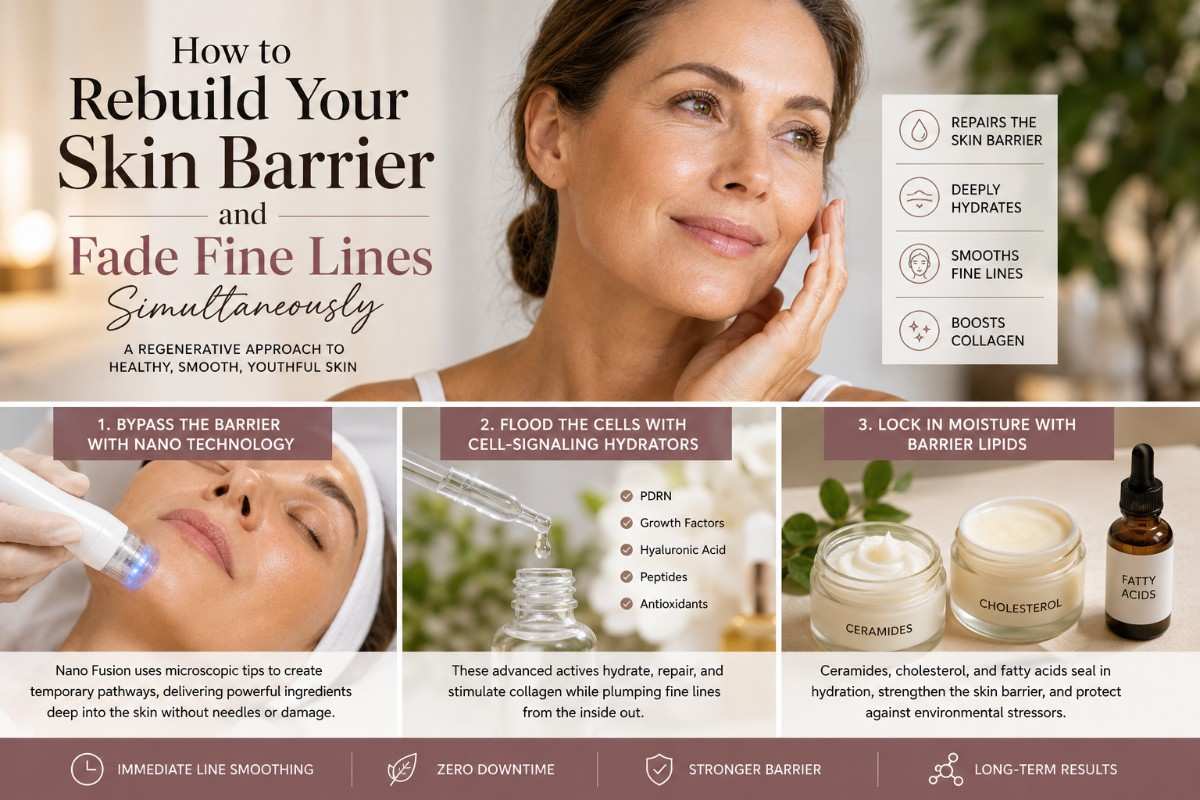
To understand why these concerns are connected, it helps to understand the role of your skin barrier. The outermost layer of skin, known as the stratum corneum, acts as a protective shield that prevents excessive moisture loss and protects against environmental stressors.
When the barrier becomes compromised and depleted of essential lipids such as ceramides, cholesterol, and fatty acids, it can no longer effectively prevent Transepidermal Water Loss (TEWL).
As moisture escapes from the skin, cells become dehydrated and begin to shrink. This dehydration creates fine, superficial lines that make the skin appear older, thinner, and less resilient.
Unfortunately, many aggressive anti-aging treatments further weaken the barrier, leading to increased dryness, sensitivity, redness, and more visible wrinkles.
Living in the high desert means your daily sunscreen is not just an optional step in your beauty routine—it is your single most important anti-aging defense. At an elevation of over 5,000 feet, Albuquerque's thin atmosphere filters out significantly less ultraviolet radiation than coastal cities, meaning the sun’s rays reach the skin with greater intensity. This accelerated UV exposure breaks down collagen, damages elastin, and contributes to wrinkles, pigmentation, and premature aging.
Finding the best SPF for mature skin in Albuquerque can feel overwhelming. Many women over 40 struggle with sunscreens that leave a white cast, feel heavy, clog pores, sting sensitive skin, or worsen dryness. The solution is not avoiding sunscreen—it is choosing the right formula for your skin type and lifestyle.
Whether you prefer mineral, chemical, or gel sunscreen, understanding how each formula works can help you protect your skin while maintaining hydration, comfort, and a youthful appearance.
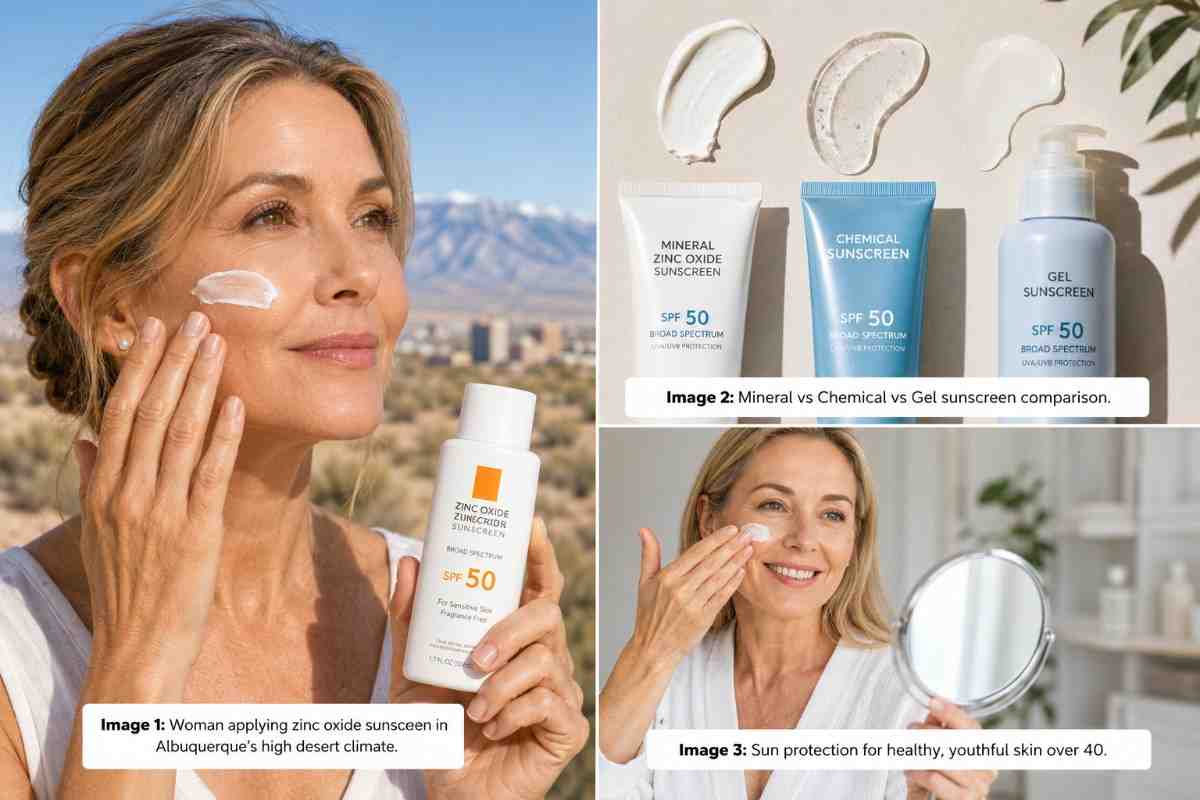
Albuquerque's high elevation and abundant sunshine expose the skin to stronger ultraviolet radiation throughout the year. UV damage accelerates collagen breakdown, weakens the skin barrier, and contributes to:
For women experiencing hormonal skin changes after 40, daily sun protection becomes even more important for preserving healthy, radiant skin.
For decades, the beauty industry followed a “no pain, no gain” philosophy. Aggressive chemical peels, deep resurfacing treatments, and procedures that caused visible peeling or downtime were often considered the most effective way to achieve younger-looking skin.
Today, modern aesthetic medicine is undergoing a major transformation. The focus has shifted from damaging the skin to stimulate repair, toward regenerative skincare, which works with the skin’s natural biology to restore, repair, and rejuvenate it from within.
Many traditional anti-aging treatments rely on controlled injury to trigger a healing response. As skin ages, collagen levels decrease and healing slows down, making recovery more difficult.
This can lead to sensitivity, redness, uneven tone, and inflammaging — a chronic inflammation process that accelerates aging.
Exosomes are microscopic messengers that improve cell communication, support collagen production, and reduce inflammation.
PDRN is a DNA-derived ingredient that helps repair tissue, improve elasticity, and strengthen the skin barrier.
Growth factors stimulate skin regeneration, reduce fine lines, and improve firmness.
A soothing ingredient that reduces redness and supports healing after treatments.
Within the clinical aesthetics industry, there is an ongoing debate regarding post-treatment protocols for microchanneling and microneedling. Some traditional schools of thought argue that you should never cool the skin or apply calming therapies after a treatment, believing that you must let the face remain hot and inflamed to get maximum collagen results. However, modern regenerative aesthetics has shown the importance of managing excessive heat and supporting the skin’s recovery process.
In our unique high-desert climate, managing heat and inflammation post-treatment is a critical factor in achieving safe, beautiful results. Applying immediate, structured cooling therapy can help support skin comfort and recovery.
Cooling therapy after microchanneling helps calm excess inflammation, supports the skin barrier, and may reduce the likelihood of prolonged redness and uneven pigmentation. While controlled inflammation is part of the skin’s natural healing process, excessive heat can increase skin sensitivity and delay recovery.
By shifting your post-care focus from aggressive recovery to intelligent skin support, you can help maximize the benefits of your treatment while maintaining a healthier-looking complexion.
When exploring advanced treatments to address signs of aging, texture, and volume loss, the traditional skincare world will often tell you that you have to endure needles, pain, and downtime to get real results. For years, the standard advice for smoothing out fine lines or crepey skin was to puncture the tissue, causing trauma that forces the skin into a survival response.
Today, modern regenerative aesthetics has proven there is a much more intelligent way to rejuvenate mature skin. By combining advanced nano-technology, electrical current, and hyperbaric pressure, we can stimulate the skin and drive cellular change without causing an ounce of brute-force injury.
Nano Fusion with electroporation and high-pressure oxygen is the ultimate needle-free anti-aging treatment because it dramatically increases skin permeability and product absorption without breaking the skin barrier. This advanced protocol uses microscopic silicone pyramids to part the outer cells of the stratum corneum, while gentle electroporation pulses open the cell membranes themselves. High-pressure oxygen then drives an atomized blend of peptides, hyaluronic acid, and growth factors deep into the epidermis, delivering instant plumping and long-term repair with zero pain or downtime.
If you are managing mature, dehydrated skin and want to smooth out a crinkled texture, restore lost radiance, and support your moisture barrier simultaneously, this triple-action modality offers a sophisticated, modern alternative to invasive procedures.
Your skin in your 40s, 50s, and beyond is full of life, beauty, and wisdom, but it is also biologically vastly different than it was in your 20s and 30s.
As we cross the threshold of 40, shifting hormone levels, perimenopause, and a natural deceleration in cellular turnover completely alter how our skin behaves. Yet, many women continue to book the exact same types of facials they did decades ago: standard steam, heavy manual extractions, and a basic clay mask.
If you want real, visible, and transformative anti-aging results, your professional skincare treatments need to evolve along with your body. Let's look at what mature skin actually requires during a professional facial to look its absolute best.
When women notice the sudden appearance of fine lines around their eyes, mouth, or cheekbones, their immediate reaction is often to panic and assume that permanent aging has set in. Many assume that the only solution to these changing lines is to schedule consultations for expensive cosmetic injectables, fillers, or aggressive chemical resurfacing.
However, there is a very common, highly overlooked truth in dermatology: many of the lines you see on your face are not permanent, structural wrinkles at all. Instead, they are simply dehydration lines.
Let's explore the science of how deep hydration can dramatically improve, and even completely erase, the appearance of fine superficial lines.
To understand how hydration changes the surface texture of your face, think of the structural difference between a plump grape and a dried raisin. Both objects possess the exact same amount of skin structural material. However, the grape is completely filled with water, which pushes outward against the skin, keeping the surface perfectly smooth, taut, and bouncy.
When we talk about hyperpigmentation, sunspots, and age spots, the conversation almost always revolves around ultraviolet radiation. We are constantly told to wear sunscreen, wear wide-brimmed hats, and avoid the midday sun. While protecting your skin from the intense sun is absolutely vital, there is another hidden culprit behind dark spots that most people completely overlook: dry desert air.
If you live in an arid climate and feel like your hyperpigmentation refuses to fade, even though you apply high-quality SPF every single day, the underlying issue is likely severe skin dehydration. There is a deep, biological connection between dry air and dark spots that changes how we must treat the skin.
If you look at a standard spa or skincare menu, you will often find a long list of facial options. It can be incredibly overwhelming to choose the right one, and many people default to a standard or traditional facial, assuming that all facials do generally the same thing for their skin.
However, if you are managing mature skin, especially in a dry, high-altitude desert environment, a traditional facial may not provide your tissue with the deep, structural resuscitation it actually needs to thrive.
Let's break down the major structural and scientific differences between a traditional facial and an Oxygen Infusion facial, so you can choose the exact treatment your skin requires.
Think of a traditional facial as excellent maintenance for the very top layer of your skin. A standard, traditional session typically relies entirely on manual application and surface styling. The process usually includes a surface cleanse, physical or chemical exfoliation to sweep away dead skin cells, manual extractions to clear out pores, a facial massage to stimulate blood flow, and a topical cream mask.
The result of a traditional facial is that your skin feels clean, smooth, and temporarily refreshed. However, the limitation is that the products used are applied manually and sit predominantly on the surface of the face. They cannot easily bypass the skin’s natural lipid barrier, which means the deep, underlying cellular dehydration remains completely untouched.
As our skin matures, one of the most common and frustrating texture changes we notice is skin that begins to look thin, fragile, and finely crinkled—very much like a piece of delicate crepe paper. This structural shift, known widely as crepey skin, commonly shows up around the eyes, on the neck, across the chest, and around the mouth. It can make you feel like your skin is aging faster than you are, especially in an unforgiving high-desert environment.
Many women over 40 invest hundreds of dollars into expensive over-the-counter anti-aging moisturizers, only to find that they do absolutely nothing to smooth out this crinkled surface. This is because crepey skin is not a basic surface dryness issue; it is a structural collapse occurring deep within the tissue where traditional creams cannot reach. While traditional microneedling is often recommended to fix this deep structural wear, many individuals hesitate due to a fear of needles, procedural pain, bleeding, and the social downtime required for recovery.
Yes, needle-free Nano Fusion can significantly improve crepey skin. Nano Fusion uses a patented device tipped with microscopic silicone pyramids thinner than a human hair to create thousands of invisible, temporary nano-channels in the skin’s outer layer. This non-invasive process increases the absorption of professional collagen-boosting peptides and deep hydrators by up to 97%. It gently stimulates cellular communication and fibroblast activity to plump, firm, and remodel thin, crinkled skin tissue without pain, needles, or downtime.
By understanding the science behind why crepey skin forms and how nano-technology bypasses the limitations of traditional spa facials, you can safely fast-track your way to a smoother, firmer, and completely rejuvenated complexion.
To understand why Nano Fusion is so effective, it helps to understand what is actually happening beneath the surface of your skin to cause that crinkled, crepe paper appearance. Crepey skin is fundamentally different from structural expression wrinkles, like laugh lines or frown lines, and it requires a completely different treatment approach.
The primary driver of crepey skin is the natural degradation of collagen and elastin fibers in the dermis. Collagen provides the sturdy scaffolding that keeps your skin firm and plump, while elastin allows your skin to snap back into place when stretched. Starting in our 20s, we naturally lose about 1% of our collagen every single year. By the time a woman transitions through perimenopause and menopause, estrogen drops sharply, causing a massive, rapid decline in collagen production—up to 30% lost in the first five years of menopause alone.
When the underlying mattress springs (collagen and elastin) flatten out, the sheet on top (your epidermis) begins to sag and crinkle. In a high-altitude, low-humidity environment like Albuquerque, this structural collapse is severely worsened by extreme, chronic dehydration. When your cells are continuously starved of water, they shrivel up, making the skin surface look dramatically thinner, drier, and more crepey than it actually is.